Limerance, an intense romantic obsession fueled
by Social Media, is a dopamine addiction. Withdrawal
pain occurs while starving limerance, as you discover
courtesy of the Washington Post in a guest post
Written By Grey Battle
Anna Ivanova, a 28-year-old artist, flipped through
old letters at a flea market stall in Sofia,
Bulgaria. She came across a series of notes from
1947, written on blue paper by a woman who shared
her name.
This woman, Anna Mihaylova, wrote obsessive love
letters to a man named Milcho Radev. Mihaylova
describes feeling crazy and irritated. She writes
that she can’t stand anything, that she would
like to shoot the whole world so it could be just
her and Radev left. “She’s constantly in her
thoughts with him,” Ivanova says.
Mihaylova’s affection is one-sided. “She keeps
noting that he doesn’t respond, or he doesn’t
care, or he doesn’t seem to feel the same way,”
Ivanova says. It reminded her of her own
infatuation. She collected as many of the letters
as she could.
Then she compared her diary entries beside them.
Ivanova wrote about her hunger for the person she
was seeing, being tired of constantly thinking
about him, deciding “everything is a lie, then
everything is true, and then everything is a lie
again.”
Anna Ivanova found limerence-filled letters dating
back to 1947 at a flea market. She recognized
herself in them. (Anita Atanasova)
She peeled through five years’ worth of diaries,
finding that even as her love interest changed, she
experienced “the same relationship over and
over.” These relationships were defined by
overthinking to the point of obsession. Sometimes
the obsession would burn out, but other times it
would last for years. She recalled finally
realizing, “I’m in limerence.”
The term “limerence” was coined by Dorothy
Tennov in the 1970s to describe profound romantic
infatuation. It’s characterized by frequent
thoughts about a love interest, moods dependent on
their actions and vivid fantasy. While limerence
appears in art and literature throughout history
(think William Shakespeare’s “O brawling love,
O loving hate” and Simone de Beauvoir’s
“ecstatic union”), use of the term has exploded
since the dawn of social media.
Searches for “limerence” have increased 500
percent over the past five years, according to
Google Trends. Under the hashtag #limerence, 43,000
videos are published to TikTok and 46,000 posts to
Instagram. Forums and support groups have appeared.
“All of a sudden we saw limerence cropping up
everywhere,” says Lynn Marshall, a 58-year-old
psychologist at England’s University of
Chichester. Social media created a digital world
primed for limerence, one full of information and
uncertainty, both of which light up the brain’s
reward system and fuel fixation.
“They’re selling the telescope and the
camouflage to the same market,” former Meta
software engineer Matt Hannan, 28, wrote in an
email to The Washington Post.
“A lot of young people effectively use Instagram
as a dating app and as the main arena where social
positioning happens,” explains Hannan, who worked
for the company from 2021 to 2024. “These
features sell better intel in that game: who’s
watching you, how closely and where you stand.”
Meta did not respond to The Post’s request for
comment.
Mihaylova’s limerence-filled letters appeared to
last four consecutive days, while Ivanova’s
limerence lasted three years. One reason limerent
episodes last longer online is unprecedented
information access, says Marshall, the
psychologist. On social media, you can find a
person’s relatives, friends and activities —
fantasy-building fodder.
Then there is the uncertainty of how to decode
signals, like an Instagram story, which lends
itself to spirals of overthinking. Marshall says
people in limerence may spend hours trying to
decode nebulous online signals as interest or
disinterest. Ivanova recalls searching for answers
by questioning the online behavior of the person
she obsessed over: “When did he like my photo?
Who else’s photo did he like?”
Limerence shares traits of a crush, except those
traits occur with an “enormous intensity,”
Marshall says. “It is overwhelming and intense
and disruptive to daily life.”
But its trigger is often an ordinary gesture: a
raised eyebrow, prolonged eye contact, a smile.
“It takes no more than a few weeks to go from
thinking a little bit about that person to thinking
about them 24/7. They’re in your dreams,”
Marshall explains. “When you talk to people
who’ve had limerence, they can say exactly the
moment they noticed this feeling come on.”
Ivanova can. Her last phase of limerence began four
months into dating a man. The couple had plans that
fell through; he couldn’t make it. “I started
getting obsessed with reading the situation,” she
says. It inspired her to create a book of
illustrations, depicting limerence in the age of
the internet.
Neuroscientist Tom Bellamy, 50, began writing a
blog about limerence with the pen name “Dr. L.”
He had developed limerence for a co-worker at
England’s University of Nottingham. He was
married, and so was she.
He recalled noticing “something unusually
attractive” about her. Now Bellamy understands
this glimmer as the beginning of limerence. It’s
when norepinephrine, a hormone released by the
adrenal glands, causes feelings of exhilaration. At
the same time, elevated dopamine levels push a
person to seek out contact. If that contact is
rewarding, oxytocin, known as the “love
hormone,” floods the brain.
Bellamy surveyed 1,500 adults to conclude that more
than half experience limerence. As it escalates,
the dopamine signal driving reward-seeking behavior
gets stronger. At the same time, the executive
functioning of the brain, which regulates desire,
is weakened. Endorphins drive the highs, which
Bellamy calls a “natural equivalent of heroin.”
As with an addictive drug, the limerent person
needs more from their love interest to get the same
high.
Apps like Instagram are bursting with “accessible
reinforcement material,” Bellamy says. Viewing an
image of a love interest offers a quick hit but
eventually triggers real-life emotional
attachments. The obsession becomes a ritual, and
social media environments serve as the
infrastructure.
The irony of it all is that limerence is often born
from a desire for closeness, Bellamy says. It is
unsurprising to him that loneliness and limerence
have been rising at the same time.
To get out of limerence, the supply must be cut
off. Bellamy recommends limiting contact as much as
a person can, so that no rewards are reinforced.
Withdrawal pain will occur, he warns. Marshall
refers to this process as “starving.”
Ivanova did everything she could to get over
limerence. She stopped communicating with her
latest love interest. She removed their accounts
from her social media pages. She refrained from
searching their name to find updates about their
life.
“I couldn’t see anything, but I wouldn’t stop
thinking. It was constant,” she says. “It took
months and months.”
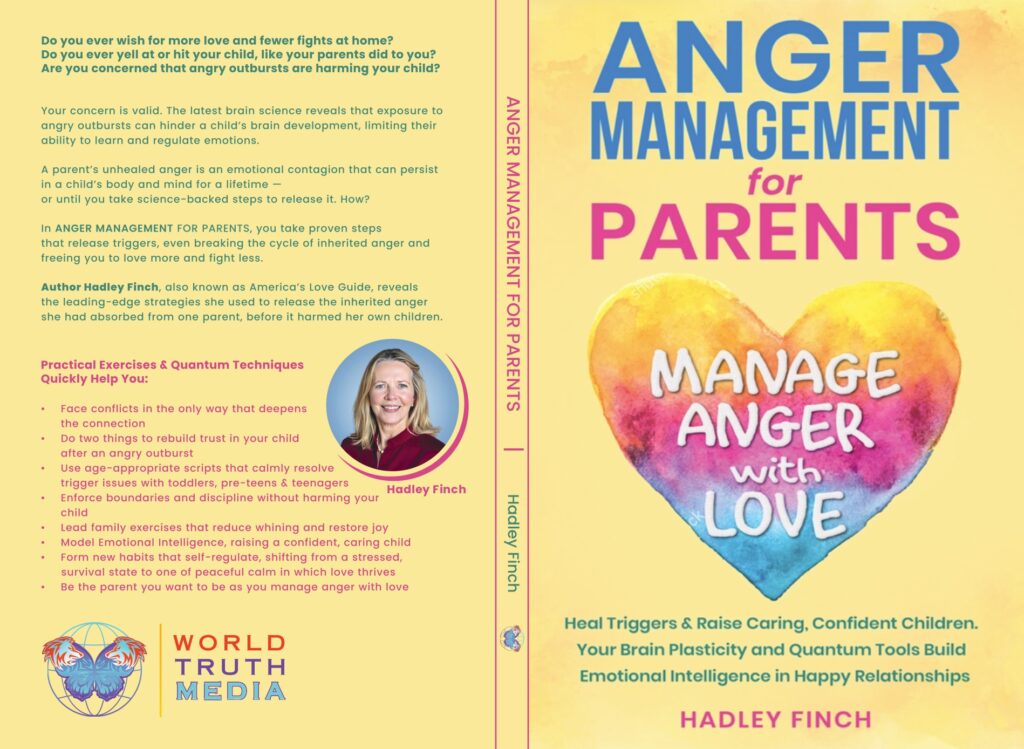
And discover quantum strategies to ease the withdrawal
pain and anger you may feel while starving limerance
as you explore Chapter 5 of Anger Management For Parents By Hadley Finch.